
Full Cast & PFM Crowns and Bridges
Time-tested restorations for strength and predictable outcomes
Full cast and porcelain-fused-to-metal (PFM) crowns and bridges are fixed dental restorations designed for high occlusal loads, long-span support, and predictable seating. These restorations use metal or metal-ceramic frameworks to deliver durability, precise fit, and long-term clinical reliability in demanding cases.
Why Full Cast & PFM Restorations Are Still Used?
Dentists continue to choose full cast and PFM options because they combine decades of proven reliability with practical advantages in modern workflows:
- Durability: Withstand high occlusal forces in posterior zones.
- Versatility: Suitable for crowns, 3-unit bridges, and long-span cases.
- Esthetics: PFMs offer layered porcelain for lifelike anterior results.
- Value: Cost-efficient compared to some all-ceramic solutions.
- Predictability: Consistent outcomes backed by CAD/CAM fabrication.
Types of Full Cast & PFM Restorations
According to the American Dental Association, crowns remain among the most commonly prescribed restorative treatments in dentistry—underscoring the continued clinical relevance of full cast and porcelain-fused-to-metal (PFM) restorations for durability-driven cases.
Summit Horizon Dental Lab provides a range of full cast and PFM restorations designed to meet the functional and esthetic needs of each case. These time-tested options are commonly used for posterior crowns, single units, and multi-unit or long-span bridges, particularly when cost efficiency, strength, and long-term reliability are priorities. All restorations are fabricated in our St. Louis–based lab using CAD/CAM workflows and experienced technician oversight, supporting predictable seating and consistent results for dentists locally and nationwide.
FULL CAST CROWNS
Full cast crowns are fabricated entirely from metal, offering maximum strength and long-term reliability. They remain a trusted solution for posterior restorations, particularly when occlusal forces are high.
Best for:
- Posterior crowns requiring long-term durability
- Patients with bruxism or heavy bite forces
- Cost-sensitive cases where esthetics are not the priority
Materials:
- High noble alloys
- Noble alloys
Commonly selected when maximum strength and longevity are the primary clinical goals.
What this means for your practice:
A reliable, cost-effective option that reduces the risk of remakes and provides peace of mind for demanding posterior cases.
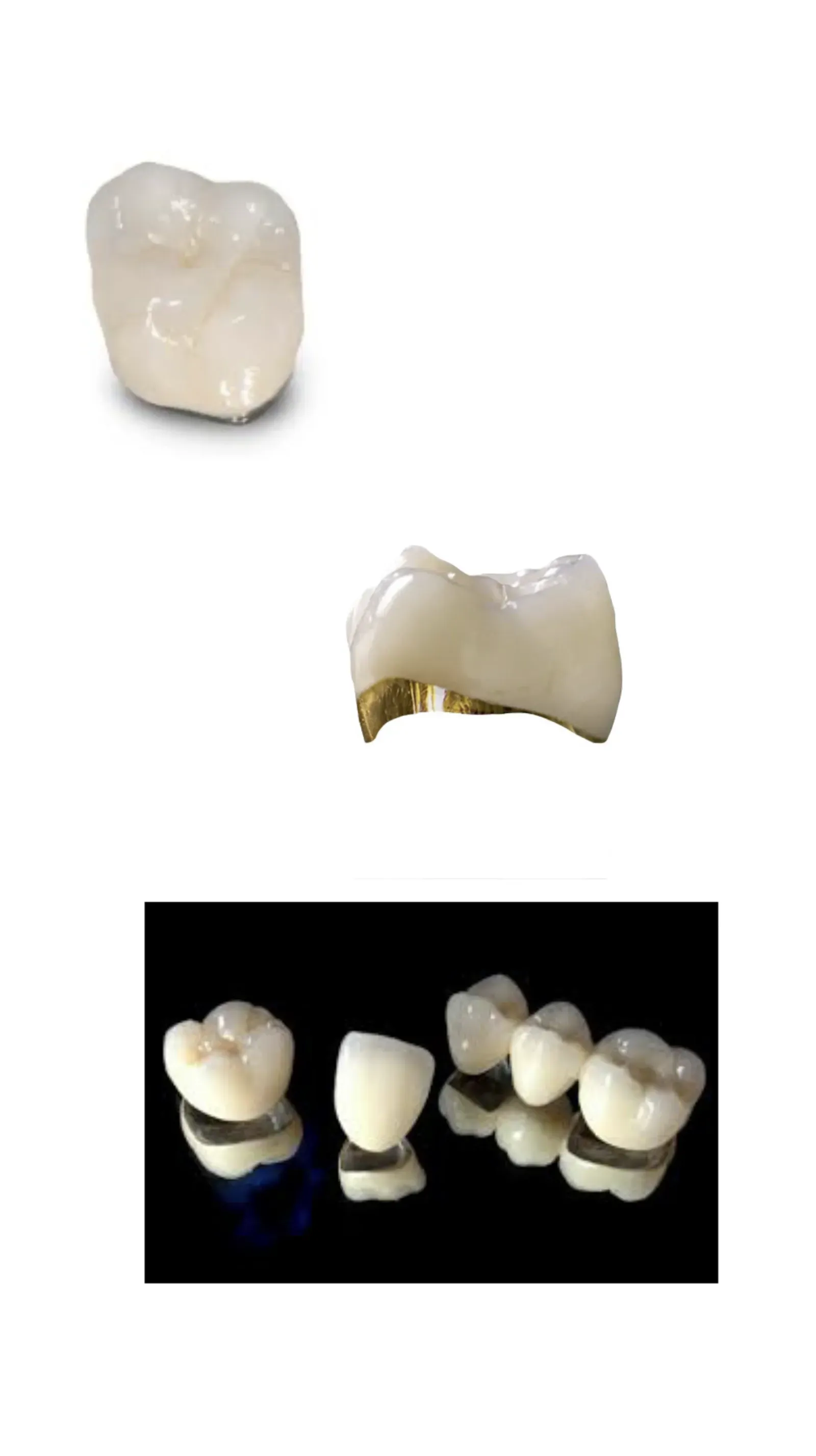
PFMs combine a durable metal substructure with porcelain layering to achieve a balance between strength and esthetics. Ideal for anterior and posterior cases where appearance matters but function cannot be compromised.
Best for:
- Single-unit anterior or posterior crowns
- Situations requiring both strength and esthetics
- Patients with moderate esthetic demands and strong occlusal forces
Materials:
- Metal substructure with layered porcelain
- Alloy choice based on strength and budget requirements
Appropriate when esthetic blending is needed without sacrificing functional strength.
What this means for your practice:
Predictable outcomes that balance appearance with strength, making them versatile for a wide range of cases.
PFM BRIDGES (INCLUDING LONG-SPAN CASES)
PFM bridges extend the proven benefits of porcelain-fused-to-metal into multi-unit and long-span cases. Their strength makes them suitable for complex restorative needs while maintaining esthetics.
Best for:
- 3-unit bridges
- Long-span multi-unit cases where zirconia may not be ideal
- Posterior replacements under high occlusal load
Materials:
- Metal framework with layered porcelain
Frequently used for multi-unit cases requiring reinforced frameworks and long-term stability.
What this means for your practice:
Confidence in tackling multi-unit cases with restorations that hold up over time and reduce the risk of costly failures.
PFM Craftsmanship: Metal Substructure Thickness, Then Porcelain
See how Summit-Horizon verifies precise metal substructure thickness before layering porcelain on a PFM crown. This quick look highlights the harmony of digital measurement and technician artistry that delivers strength, esthetics, and long-term performance.
Clinical Tips for Full Cast & PFM Restorations
Material & Case Planning Guidance
Selecting the right material for each case is essential for balancing durability, esthetics, and patient expectations. At Summit Horizon, we collaborate with dentists to recommend the most appropriate option, whether that’s a full cast crown for posterior strength, a PFM crown for esthetic blending, or a long-span PFM bridge for multi-unit cases. Our team ensures that alloy selection, porcelain layering, and framework design align with the functional demands and esthetic goals of each patient.
- Full Cast: Maximum strength and reliability for posterior crowns and bruxism cases.
- PFM Crowns: Strong substructure with esthetic porcelain layering for anterior and posterior use.
- PFM Bridges: Durable frameworks that manage high occlusal loads in multi-unit or long-span restorations.
What this means for your practice: Clear material recommendations and case planning support that simplify decision-making and improve clinical outcomes.
Long-Span Considerations
Submission & Turnaround
Records: IOS scans (STL/PLY), opposing arch, bite, shade photos; for analog: PVS impressions, verification jig (bridges/full arch).
Typical timelines:
- Single-unit crowns: ~7–10 business days
- Bridges: ~10–12 business days
- Full-arch workflows: provisional ~5–7, definitive after prototype approval varies by case
Rush availability: Contact the lab.