
3D Printed Dentures vs. Traditional Dentures: Fit, Speed, and Patient Outcomes Compared
When a patient needs a full denture, your lab can 3D print it or process it the conventional way, and the gap between 3D printed dentures and traditional dentures comes down to a specific set of tradeoffs rather than a simple upgrade. Both routes can produce a denture that fits, functions, and holds up. They get there differently, and they win on different terms. Printed dentures move faster, waste less material, and can be reprinted from saved digital files. Conventional heat-cured dentures still lead on flexural strength and carry decades of clinical track record. This guide compares the two on fabrication, fit and accuracy, strength and durability, turnaround, cost, and patient outcomes, with a side-by-side table and a dentist-focused FAQ to help you match the workflow to the case.
The Short Version Choose 3D printed dentures when speed, lower cost, reproducibility, and digital archiving matter most, and for economical provisionals or spare sets.
Choose traditional heat-cured dentures when maximum flexural strength and a long, proven track record are the priority.
Printed, milled, and conventional workflows can all deliver a clinically acceptable fit.
How Each Denture Is Made
A denture has two parts to get right: the base that rests on the tissue and the teeth that do the work. How a lab builds them is where printed and conventional dentures diverge.
3D Printed Dentures: Additive Manufacturing
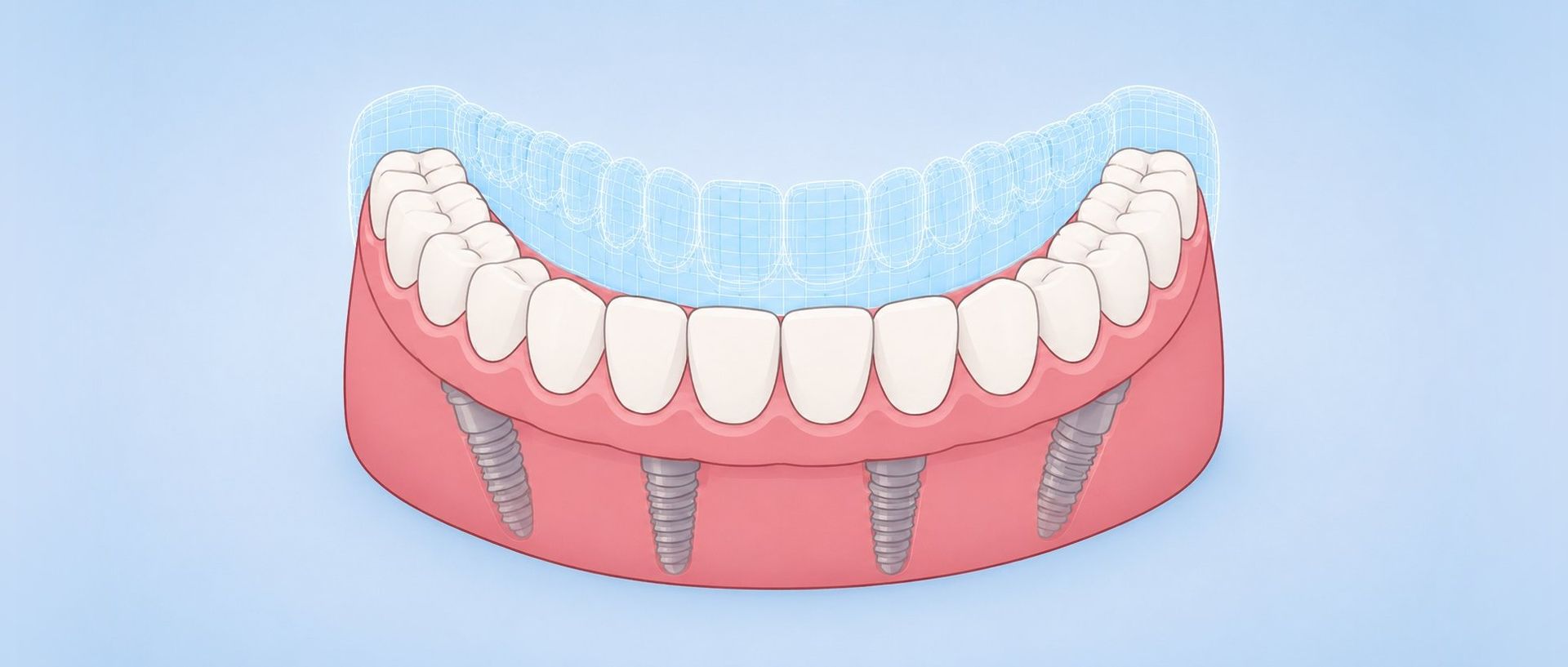
A 3D printed denture is built by additive manufacturing. Resin printers cure liquid photopolymer layer by layer to form the base, and in many workflows the teeth as well, directly from a digital design. Once the print finishes, the part is washed and post-cured under light to reach its final mechanical properties. Because the geometry comes straight from a CAD file, the same denture can be reprinted later without redoing the impression.
Traditional Dentures: Heat-Cured PMMA
Conventional dentures are processed from heat-cured polymethyl methacrylate, or PMMA. The technician arranges teeth in wax, invests the case in a flask, eliminates the wax, then packs or injects PMMA dough and cures it under heat and pressure. What comes out is a dense, well-documented base material that has anchored removable prosthetics for decades. The workflow is largely analog, with more hands-on steps than a print.
Subtractive milling is a third digital route worth noting. A mill carves the base from a puck of pre-polymerized PMMA, which produces very dense material and excellent trueness. Milled dentures sit between printed and conventional on cost and workflow, and they appear often in the fit studies below.
Fit and Accuracy: What Studies Show
Fit starts at the intaglio surface, the tissue-facing side of the base. Trueness, how closely the finished surface matches the digital design or master cast, is the metric researchers use to compare workflows.
A 2023 clinical study found milled denture bases slightly truer than 3D printed bases, yet the authors judged the difference clinically negligible (Lo Russo et al., 2023). Both materials produced bases that seated acceptably. A 2024 clinical comparison pointed the other way against conventional processing, with printed bases reaching a median intaglio trueness near 177 micrometers versus roughly 342 micrometers for the analog workflow, favoring printed in that study (Faur et al., 2024).
Put the evidence together and a ranking emerges: milled tends to be truest, printed sits close behind, and conventional processing trails. The practical caveat matters as much as the ranking. Differences between these workflows are frequently small enough to carry limited clinical significance, and a well-made denture from any of the three can seat and retain well. Printed bases clear the bar for clinically acceptable intaglio fit, but they do not automatically beat conventional dentures in every scenario.
Strength and Durability
Strength is where the marketing narrative most often outruns the evidence. For the denture base, flexural strength is the headline property, and conventional PMMA generally wins it.
Pooled in-vitro data are consistent on direction. Heat-cured PMMA posts higher flexural strength than printed resin, and a 2022 systematic review and meta-analysis found that advantage statistically significant (Lourinho et al., 2022). Representative figures place heat-cured PMMA at 95 to 119 MPa, with printed resins lower and more variable (Azab et al., 2025). The ISO 20795-1 standard sets a minimum flexural strength of 65 MPa for Type 1 heat-polymerized denture base polymers, and many printed resins clear that threshold. They still trail heat-cured PMMA on bending strength.
Printed resins are not behind on every measure. Several studies report better impact strength for printed denture materials, which speaks to resistance against the sudden load of a drop rather than slow flexion. That toughness is a genuine printed advantage worth weighing against the flexural gap.
Two process variables complicate any blanket claim. Build orientation introduces anisotropy, so a base printed flat can behave differently from one printed at an angle. Post-curing time and intensity also shift final strength. Results are material- and process-dependent, so citing a single number for printed resin oversimplifies the picture. One more distinction keeps the comparison honest: most published strength data concern the base resin, not printed teeth, which are evaluated separately for wear and bond strength. Reviewers also note that ISO 20795-1 was written around heat-cured PMMA, and that standards tailored to printed resins are still developing (Azab et al., 2025).
Speed, Workflow, and Cost
Where printed dentures clearly pull ahead is the production pipeline. Additive workflows compress the path from design to finished base, with fewer hands-on steps than packing and curing PMMA in a flask. That usually means faster turnaround, though timelines depend on the case and the lab's scheduling.
Material efficiency is another edge. Printing deposits resin close to net shape, so waste stays low compared with subtractive or analog methods. Per-unit machine cost tends to run lower as well, which is part of why printed dentures often land at a friendlier price tier.
The reproducibility benefit may be the most underrated. Because a printed denture lives as a digital file, the lab can reprint the same design on demand. Patients who lose or fracture a denture can get a like-for-like replacement without a new impression appointment, and keeping a spare set on hand becomes practical. Conventional dentures, by contrast, generally need full re-fabrication if no digital record exists.
Patient Outcomes: When Each Denture Fits
Translate the tradeoffs into case selection and the decision gets simpler. Printed dentures fit cases that prize speed, lower cost, reproducibility, and digital archiving. They also work as economical provisionals and as spare sets that back up a definitive prosthesis. A patient mid-treatment, a snowbird who wants a travel spare, or a practice that values quick replacement all line up well with a printed workflow.
Conventional heat-cured dentures earn their place when maximum flexural strength and a long, documented track record carry the most weight. Patients with heavy occlusal function, a history of fractured bases, or demanding definitive cases benefit from the bending strength PMMA still leads on. Neither option is a universal default. The right call follows the priorities of the specific patient and arch.
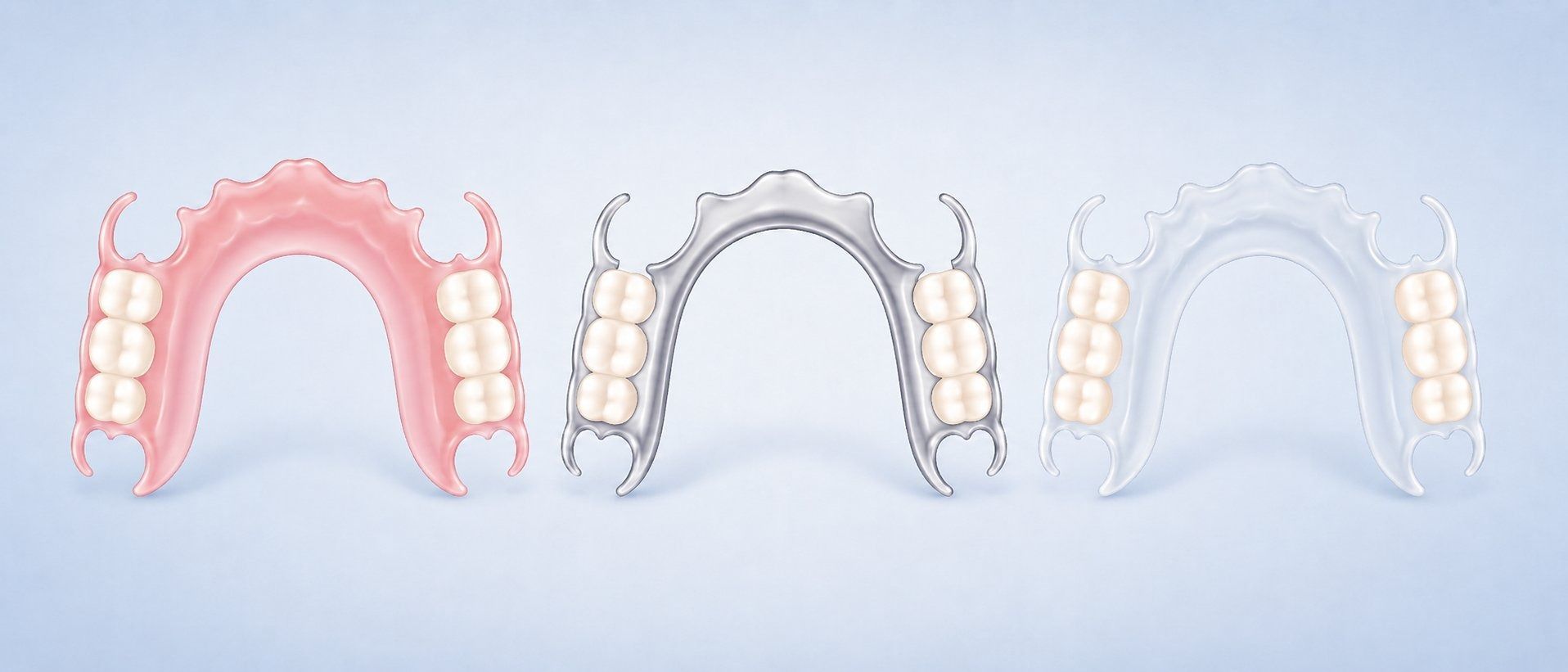
For patients who are not full-denture candidates, partial designs in TCS, metal, and clear framework partials each carry their own tradeoffs. Walking a patient through these options is its own skill, and our guide on helping patients see the value in dentures covers the conversation side of denture cases.
3D Printed vs. Traditional Dentures: Side-by-Side
| Factor | 3D Printed Denture | Traditional (Conventional) Denture |
|---|---|---|
| Fabrication | Additive: printed resin, post-cured | Pack-and-press or injection: heat-cured PMMA |
| Fit / trueness | Clinically acceptable; close to milled in studies | Clinically acceptable; generally less true than milled or printed in some studies |
| Flexural strength | Generally lower than heat-cured PMMA; many meet the ISO 65 MPa minimum | Higher (heat-cured PMMA) |
| Impact resistance | Often higher in studies | Baseline |
| Turnaround | Typically faster | Typically longer |
| Reproducibility | Reprintable from archived digital data | Re-fabrication needs new processing |
| Material waste | Low | Higher |
| Repair | Material-dependent | Established repair workflow |
| Cost tier | Generally lower per unit | Varies |
| Best for | Speed, cost, spares and provisionals, digital archiving | Maximum strength, proven long-term track record |
How Summit-Horizon Approaches Digital Dentures
Summit-Horizon runs a hybrid digital-analog denture program, so the workflow follows the case rather than forcing every patient down one path. The lab fabricates 3D printed dentures for speed-sensitive and cost-sensitive cases, premium dentures in both 3D-printed and traditional analog formats, and elite dentures as the analog-only upgrade. That range covers the full span from an economical printed spare to a definitive analog prosthesis.
On the printing side, denture bases are produced on Asiga MAX and Asiga Pro 4K resin printers. Every denture is made in the USA, and case planning is technician-led, so material and workflow recommendations track the clinical priorities you flag. If you are weighing a printed versus conventional denture for a patient, the team can talk through fit, strength, turnaround, and archiving before anything is fabricated, then match the build to your full denture and partial options.
Frequently Asked Questions
Are 3D printed dentures as strong as traditional dentures?
Generally no for flexural strength. Heat-cured PMMA typically outperforms printed resin in bending strength, though many printed resins meet the ISO 20795-1 minimum of 65 MPa and often show higher impact resistance. Strength is material- and process-dependent, so the specific resin, build orientation, and post-curing all influence how a printed denture performs over time.
Do 3D printed dentures fit as well as conventional ones?
Studies show printed denture bases achieve clinically acceptable intaglio fit, often comparable to milled bases and truer than conventional processing in some clinical comparisons. Trueness generally ranks milled first, printed second, and conventional third, but the differences are frequently of limited clinical significance. In practice, all three approaches can deliver a denture that seats and functions well.
What is the main advantage of 3D printed dentures?
Speed and reproducibility. Printed dentures involve fewer processing steps, generate little material waste, and usually cost less per unit. Because the design is stored as digital data, the lab can reprint the same denture from the saved file without taking a new impression, which makes replacements and spare sets straightforward.
Can a 3D printed denture be reproduced if lost or broken?
Yes. The denture is designed and stored as a digital file, so a replacement can be reprinted from that saved data. No new impression appointment is needed for a like-for-like remake, which shortens the path to a replacement and supports keeping a spare denture on hand.
When is a traditional denture still the better choice?
When maximum flexural strength and a long, proven clinical track record are the priority. Heat-cured PMMA has decades of documented performance and higher bending strength than most printed resins, which can matter for patients with heavy function or a history of fractured bases. The conventional workflow remains a dependable default for definitive dentures.
Are printed dentures only for temporaries?
No. Printed dentures work well as economical provisionals and spare sets, but they are not limited to temporary use. Whether a printed denture suits a definitive restoration depends on the resin and the clinical demands of the case. As printed materials and validation continue to mature, the range of appropriate definitive uses keeps widening.
Trying to decide whether a printed or conventional denture fits your next case? Contact Summit-Horizon to talk through the priorities that drive the choice, whether that is turnaround speed, cost, flexural strength, or keeping a reprintable spare on file. When you are ready, submit a case and the team will review the arch and recommend the denture path most likely to seat and serve the patient well.
References
Share Post
Search Post
Recent Insights