
Implant-Supported Overdentures vs. Fixed Full-Arch Prostheses: Helping Edentulous Patients Decide
Choosing between implant overdentures and a fixed full-arch prosthesis is one of the first major decisions you face when planning treatment for an edentulous patient. Both restore chewing function and confidence, and each can deliver high satisfaction. The two paths diverge on implant count, bone demand, hygiene, cost, and the long-term maintenance they ask of you and the patient.
Which design fits depends on the person in the chair, not on a blanket rule about which is better. This guide gives referring dentists and implant providers an evidence-grounded framework: how the two options work, what the consensus literature supports, how satisfaction and maintenance compare, and where cost and hygiene land. A comparison table and FAQ follow.
The Short Version Lean toward an implant overdenture when cost, limited bone, lip support, or ease of cleaning are priorities and the patient can manage a removable prosthesis.
Lean toward a fixed full-arch prosthesis when the patient wants non-removable teeth, has adequate bone, and will commit to meticulous hygiene under the prosthesis.
The Two Options, Defined
Implant-Supported Overdentures
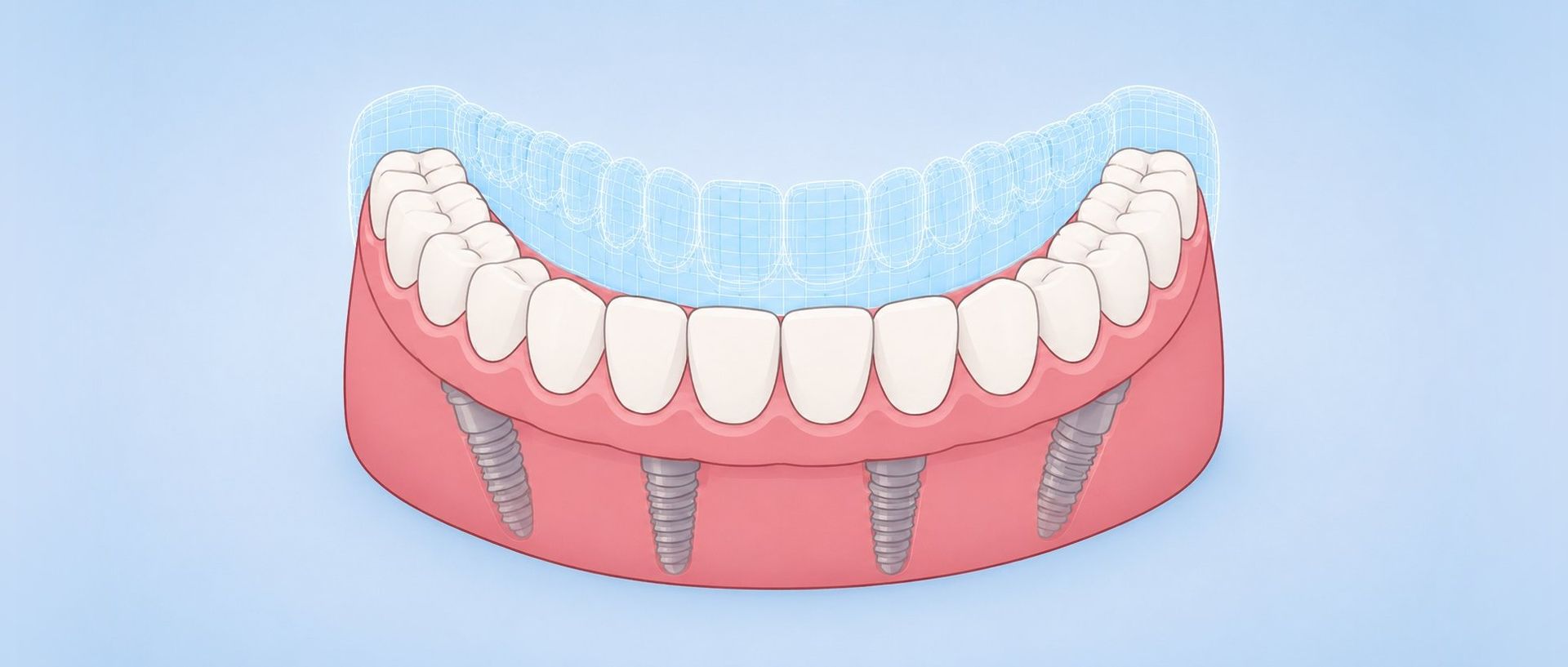
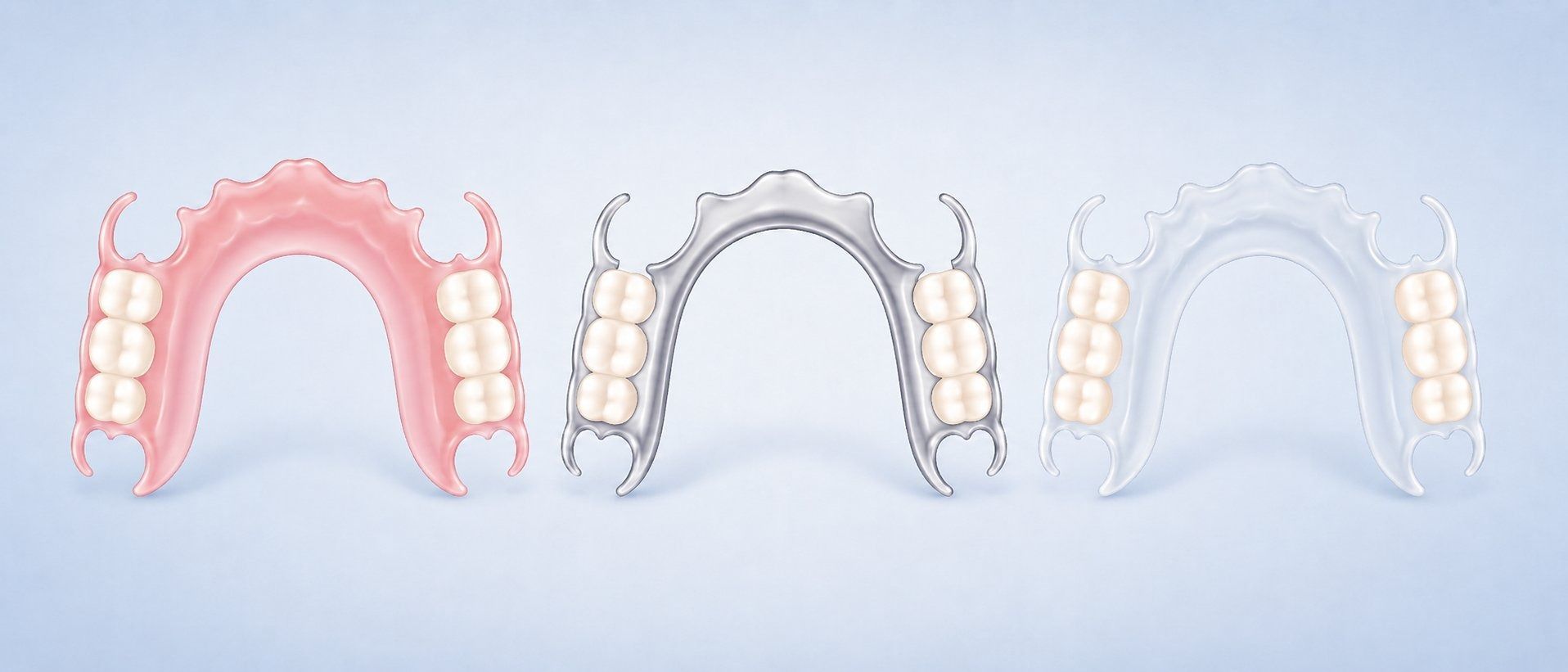
An implant-supported overdenture is a removable prosthesis that snaps onto implants through an attachment system, usually on two to four implants. Locator and bar overdentures are the common designs: individual locator attachments on each implant, or a milled or cast bar that splints the implants with retentive clips on the denture. Support is shared between the implants and the soft tissue, so the ridge still carries part of the load. The patient takes the prosthesis out to clean it and the attachments, then seats it again.
Fixed Full-Arch Prostheses
A fixed full-arch prosthesis is screwed to the implants and stays in the mouth; only the clinician can remove it. These cases typically use four to six or more implants, often through All-on-4 or All-on-6 protocols, with the prosthesis carried entirely by the implants and no soft-tissue support. Most are screw-retained hybrids: a monolithic zirconia bridge, or a titanium framework dressed with denture teeth and acrylic. Summit-Horizon fabricates these fixed full-arch prostheses in both material families. Because nothing comes out, hygiene happens around and under the prosthesis rather than by removing it.
What the Consensus Literature Says
Two consensus statements anchor most discussions of the edentulous mandible. The McGill Consensus Statement (Feine et al., 2002) and the York Consensus Statement (Thomason et al., 2009) each concluded that a mandibular two-implant overdenture should be treated as a first-choice standard of care for the lower arch. What sat on the other side of that comparison is the part clinicians sometimes forget. Both panels weighed the two-implant overdenture against a conventional lower complete denture, and judged the conventional denture a much poorer option for satisfaction, function, and quality of life.
Mind the scope. The McGill and York statements are specific to the mandible and to two-implant overdentures, and they compare that overdenture against a conventional lower denture. They do not rank overdentures against fixed full-arch prostheses, and they do not transfer automatically to the maxilla, where support and esthetic demands differ. Using them as proof that one design beats the other misreads what the panels concluded.
The takeaway is narrow but useful. Two implants under a lower denture beat leaving a patient with an unstable conventional one. Whether a removable overdenture or a fixed prosthesis is the better full-arch solution is a separate question that turns on the clinical factors below.
Comparing the Two: Clinical Factors
Both sit within the same family of implant restorative options but diverge on several axes that shape candidacy.
Implant Number and Bone
Fewer implants means less demand on bone. A two-to-four-implant overdenture can often be placed where a four-to-six-implant fixed case cannot, a realistic route for patients with significant resorption who want to avoid grafting. Fixed cases need enough bone to site more implants in load-distributing positions.
Retrievability and Serviceability
Day to day, the overdenture is the more serviceable design. Worn attachments are swapped at the chair, and the prosthesis is easy to inspect and reline. A fixed prosthesis is retrievable only by the clinician, who unscrews it for repair. Both can be serviced, but the overdenture makes routine service faster.
Lip and Facial Support
This factor often decides borderline maxillary cases. An overdenture can carry a labial flange that supports the lip and rebuilds facial contour when the premaxilla has resorbed. A fixed hybrid offers limited flange support, so a patient who needs that support for esthetics may be better served by a removable design.
Hygiene Access
Cleaning is where the paths feel most different to the patient. An overdenture comes out, so the patient cleans the prosthesis, attachments, and tissue directly. A fixed prosthesis stays in, so hygiene depends on reaching underneath with floss threaders, interproximal brushes, and a water flosser. Patients who cannot keep up that daily routine are stronger candidates for a removable design.
Patient Satisfaction and Outcomes
Patients do well with both designs, and neither claims satisfaction outright. A literature review of fixed versus removable complete-arch prostheses (Goodacre and Goodacre, 2017) found satisfaction high across the board: three studies reported higher satisfaction with fixed prostheses, while five found no significant difference. That review also found masticatory performance comparable between the two in the studies that measured it.
Individual studies sometimes favor fixed designs. In one comparison where both groups had at least four implants, those with fixed prostheses reported higher overall satisfaction and oral-health-related quality of life than the overdenture group (Brennan et al., 2010). That overdenture group was predominantly maxillary, which clouds a clean head-to-head reading.
The practical message is measured: expect a good outcome either way. A fixed prosthesis may edge ahead for some patients, but the effect is inconsistent across studies and should not, by itself, override bone, hygiene, lip support, and cost.
Maintenance and Long-Term Care
Overdentures: Attachment Wear and Retention Loss
The defining maintenance issue for overdentures is retention loss as the attachment wears. A 2022 systematic review of attachment systems for single- and two-implant mandibular overdentures found this wear-related retention loss the most common reason these cases need attention, usually resolved by activating or replacing the retentive insert or matrix. Plan periodic insert changes as routine care, not failure.
Attachment choice shapes the result. A systematic review and meta-analysis reported that bar attachments gave the best retention, telescopic attachments the highest patient satisfaction, and locator attachments the strongest option when interarch space is tight or implants are angulated (Patel and Vaishnav, 2025). Matching the attachment to the anatomy and the patient's priorities is part of planning the case.
Fixed Full-Arch: Screw and Prosthetic Complications
A fixed prosthesis trades attachment upkeep for a different profile. The common issues are screw loosening and fracture of the prosthetic material: chipped acrylic, a debonded denture tooth, or a cracked framework in severe cases. Add the daily under-prosthesis hygiene burden, and fixed maintenance is less about scheduled part swaps and more about managing mechanical complications and home care.
Cost and Practical Considerations
Cost usually favors the overdenture, for structural reasons: fewer implants and a simpler prosthesis. The fixed-versus-removable review found that nearly every cost-effectiveness study it examined favored overdentures (Goodacre and Goodacre, 2017). That is not the whole ledger, though. The same evidence base associates overdentures with greater residual ridge resorption over time than fixed prostheses. Both findings are well supported and belong together: lower cost and complexity on one side, more change in the underlying ridge on the other. Keep the comparison relative, since the real figure tracks implant count, materials, and the plan.
Implant Overdenture vs. Fixed Full-Arch: Side-by-Side Comparison
| Factor | Implant Overdenture | Fixed Full-Arch |
|---|---|---|
| Implants (typical) | 2 to 4 | 4 to 6 or more |
| Removable by patient | Yes | No |
| Retention and support | Implant plus soft-tissue; attachment-dependent | Fully implant-supported |
| Lip and facial support | Flange can support the lip in resorbed ridges | Limited flange support |
| Hygiene | Removed and cleaned; easier access | Meticulous under-prosthesis hygiene required |
| Bone requirement | Lower | Higher (more implants) |
| Maintenance | Attachment wear, retention loss (insert replacement) | Screw loosening, prosthetic fracture |
| Satisfaction (evidence) | High; sometimes lower than fixed at similar implant count | High; higher in some studies, no difference in others |
| Ridge resorption | Greater (per review) | Less |
| Cost tier | More cost-effective | Higher |
| Best candidate | Cost-sensitive, limited bone, lip-support needs, dexterity to remove and clean | Prefers fixed teeth, adequate bone, accepts the hygiene burden |
How Summit-Horizon Supports Both Paths
Summit-Horizon fabricates both pathways, so the recommendation you bring to the patient is not limited by what the lab can build. On the removable side, we design and produce locator and bar implant overdentures and advise on attachment selection: a bar when retention is the priority, locators when interarch space is tight or implants sit at an angle. For fixed cases, we fabricate full-arch prostheses in monolithic zirconia or a titanium bar hybrid design. We design from your scans and records and return the case ready for try-in and delivery. Implant placement stays with you. For the fixed pathway end to end, see the complete full-arch implant workflow. When a case raises retention questions on single units, screw-retained versus cement-retained implant crowns covers the tradeoffs.
Frequently Asked Questions
Is a fixed full-arch better than an implant overdenture?
Neither option is universally better. A fixed full-arch prosthesis suits patients who want non-removable teeth, have adequate bone, and will commit to meticulous daily hygiene. An implant overdenture suits cost-sensitive cases, limited bone, and situations where a denture flange is needed for lip support. Satisfaction is high with both, so anatomy, hygiene, budget, and preference should drive the choice.
How many implants does each option need?
Implant overdentures typically use two to four implants, depending on the arch and the attachment system. Fixed full-arch prostheses typically use four to six or more, since the prosthesis is carried entirely by the implants with no soft-tissue support. The lower implant count is one reason overdentures generally cost less and demand less bone.
What does the consensus literature recommend for edentulous patients?
The McGill and York consensus statements endorse the mandibular two-implant overdenture as a first-choice standard of care for the edentulous lower jaw, where a conventional lower denture is a much poorer alternative. That recommendation is specific to the mandible and to two-implant overdentures. It does not rank overdentures against fixed full-arch prostheses, and it does not extend automatically to the maxilla.
Which option requires more maintenance?
Overdentures tend to need more frequent maintenance, since retention is lost as the matrix or insert wears and the part is activated or replaced. Fixed full-arch prostheses are more prone to screw loosening and to fracture of the acrylic or denture teeth, and they demand meticulous daily under-prosthesis hygiene. One review found more maintenance events with overdentures than with fixed prostheses.
Which is more cost-effective?
Implant overdentures are generally more cost-effective, because they use fewer implants and a simpler prosthesis. That advantage carries a tradeoff worth raising with the patient: the literature also associates overdentures with greater residual ridge resorption over time than fixed prostheses. Both findings are well supported, so cost should be weighed alongside long-term bone behavior.
Can a patient clean a fixed full-arch prosthesis?
Yes, but it takes more effort than cleaning an overdenture. Because a fixed prosthesis is not removable by the patient, hygiene relies on cleaning underneath it with floss threaders, interproximal brushes, or a water flosser. An overdenture is taken out for cleaning, which gives easier access to the prosthesis and the attachments. Patient dexterity should factor into the choice.
Have an edentulous case you are mapping out? Tell us about the arch, the bone you have, lip-support needs, the patient's hygiene habits, and their preference for removable or fixed. Contact Summit-Horizon to talk it through with our team, or submit a case, and we will help match the prosthesis to the patient and fabricate it to plan.
References
Share Post
Search Post
Recent Insights