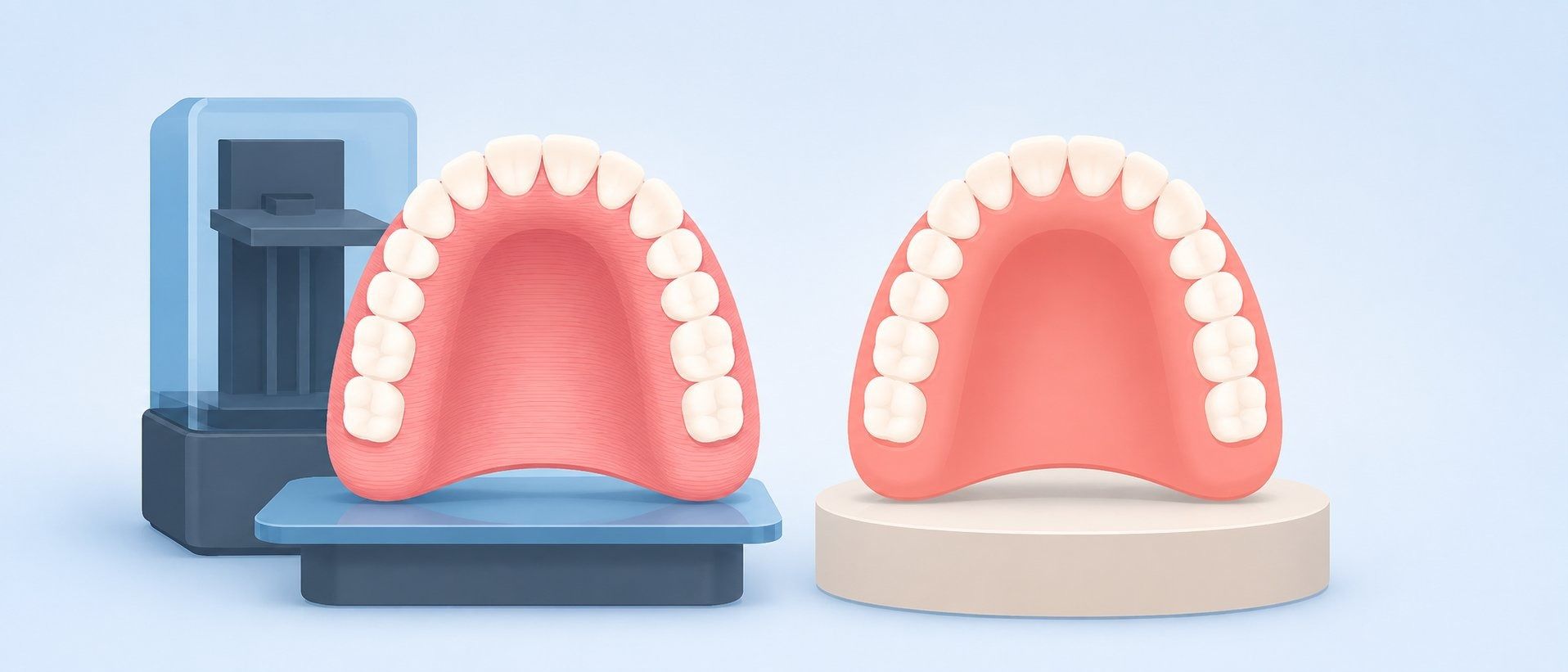

Transforming Crowns: The Impact of 3D Printing
How 3D Printing is Transforming Crowns
In the field of dentistry, technological advancements are constantly pushing boundaries, improving both the efficiency and quality of care. One groundbreaking innovation that is revolutionizing prosthetics is the utilization of 3D printing particularly with new materials that seamlessly merge ceramic and resin materials creating a product with strength, flexibility, and beauty.
Let's explore how this cutting-edge technique is reshaping the world of crowns.
The Conventional Approach; Creating Crowns Through Casting
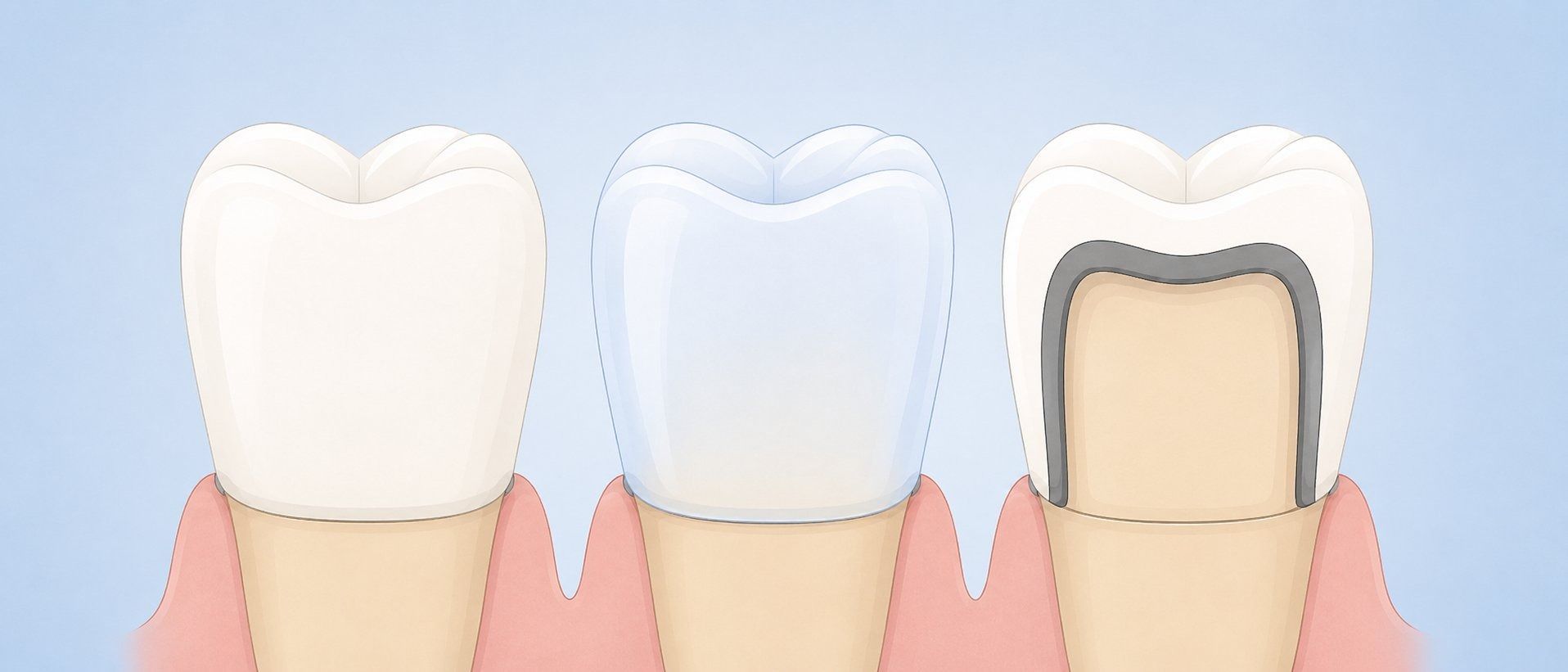
The traditional method of crafting crowns followed a step-by-step process. It began by taking impressions of the patient's teeth using dental putty. These impressions were then sent to a laboratory where skilled technicians would create a mold typically made from gypsum to shape the crown. The final step involved casting the crown using materials such as metal or porcelain which would then be carefully sculpted and polished to ensure a fit in the patient's mouth. This process often takes 10 working days to complete, meaning the patient has to wait approximately 2 weeks to receive their permanent crown.
Enter 3D Printing; Achieving Precision, Efficiency, and Beauty
The field of dentistry has been revolutionized by 3D printing making the process of creating crowns more streamlined, accurate, and precise. Instead of relying on methods like molds and manual sculpting, digital scans of the patient's teeth are used to create a virtual model. This model can then be adjusted as necessary to achieve the desired shape and perfect fit.
One fascinating aspect of using ceramic-infused resin materials such as Rodin Sculpture, in printing, is the properties of this resin material. Unlike common dental materials, these new materials offer multiple advantages. Prosthetics fabricated with these innovative materials are not only strong and durable but also biocompatible making it safe for use in applications. Additionally, the ability to be precisely manipulated allows it to closely resemble teeth in appearance. The translucent nature of these printing materials even enhances its appeal resulting in an overall improved outcome.
Mastering the Art of Dental Restoration
The exceptional qualities of these new materials make it an ideal choice for crafting crowns that function flawlessly and also have a natural look. Its capacity to faithfully replicate details such as texture and translucency ensures an integration, with the patient's existing teeth.
Furthermore, 3D printing offers customization options empowering dentists, working in conjunction with their dental lab, to tailor each crown according to the requirements and preferences of individual patients.
When it comes to creating restorations that seamlessly blend with existing teeth and accommodate bite patterns this technology offers unparalleled flexibility.
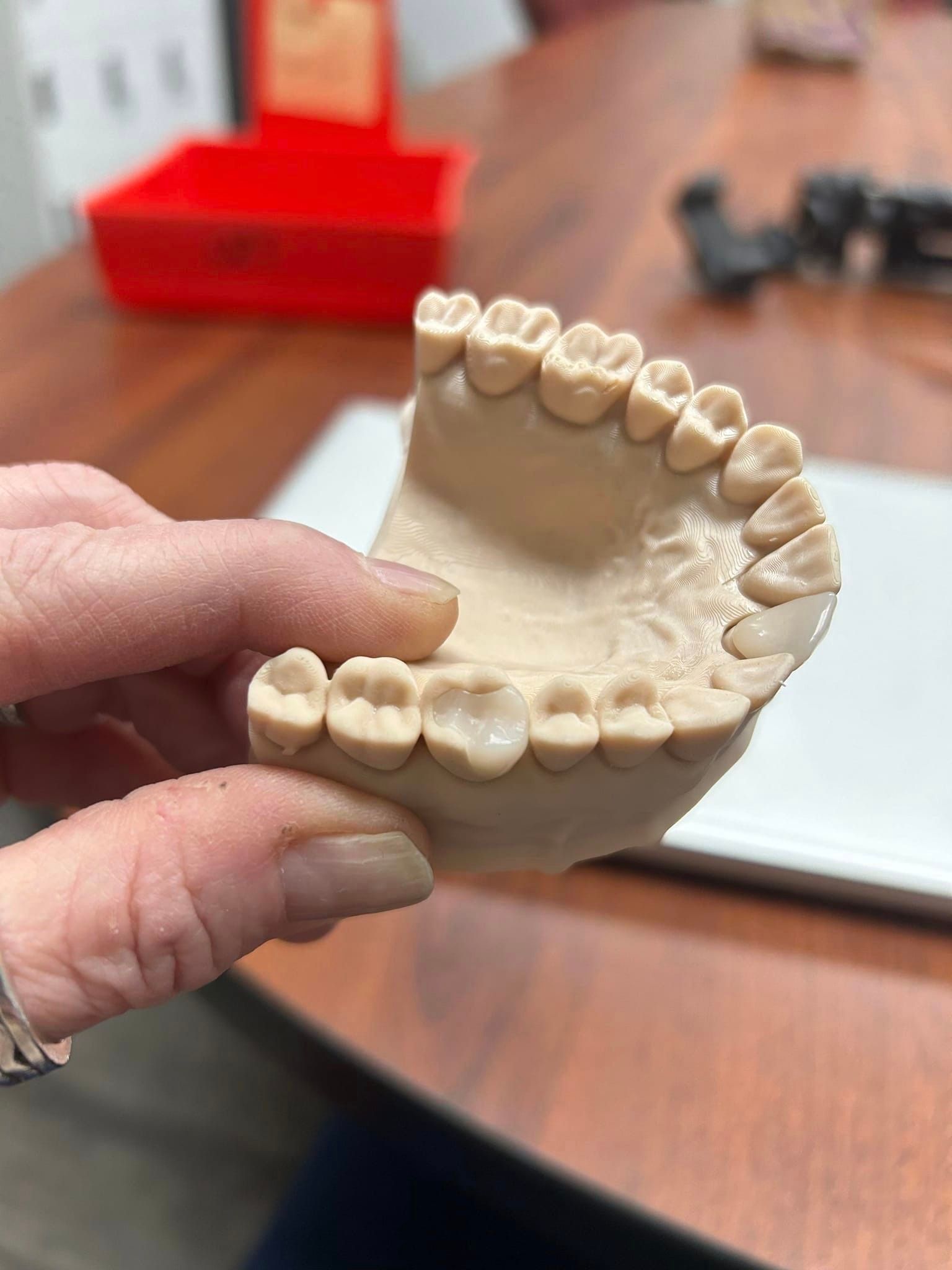
Advantages of the 3D Printed Dental Crowns:
1. Durability: The new materials are renowned for their strength and resilience, ensuring that these dental prosthetics remain stable and have functional longevity.
2. Biocompatibility: Its ability to work well with oral tissues minimizes the risk of any reactions or complications.
3. Aesthetic Appeal: By mimicking the properties and structure of natural teeth 3D printed crowns made with materials such as Rodin Sculpture, are practically indistinguishable from natural teeth.
4. Precision: Precise 3D printing benefits the manufacturing process, reducing the need for manual adjustments and improving the overall fit.
5. Efficiency: 3D printed crown cases are scanned at the dental office and digitally sent to the dental lab, the new prosthetic is digitally designed by a highly skilled dental lab technician, printed using the best materials, and finished to perfection all in a fraction of the time it takes to make a zirconia, Emax, or PFM crown. Allowing, at most, a 2-day turnaround time.
Conclusion: Paving the Way for Dentistry Future
The combination of 3D printing technology and innovative materials such as Rodin Sculpture marks an advancement in creating crowns. 3D printing streamlines the fabrication process and raises the bar in terms of quality and aesthetics. As this innovative approach continues to progress it holds the potential to transform not only dental crowns but also the entire realm of dental prosthetics – ushering in an era defined by precision, efficiency, and patient satisfaction.
Share Post
Search Post
Recent Insights